Weight management during menopause: Why weight gain happens & how to manage it

If you are a woman going through menopause, there’s a good chance you’re dealing with unexplained weight gain, mood swings and other frustrating experiences. You may even feel like you’re on an emotional rollercoaster. Hormonal and metabolic changes may well be the culprits here, making weight gain more likely, even if you have not changed your habits. (Talk about frustrating!) The good news (yes, there is good news in this) is that you don’t have to suffer alone. At CSIRO Total Wellbeing Diet, our experts have developed a menopause-specific tailored approach to supporting your body through this midlife change.
Learn more about our menopause-specific plan, the Women's Wellbeing plan
Why weight management becomes harder during menopause
Estrogen decline and fat distribution
Menopause brings frustrating changes to the body that feel unfamiliar, even if you have not made dramatic changes to your habits. One major reason for this is the decline in estrogen. As estrogen levels fall, the body becomes more likely to store fat around the abdomen rather than the hips and thighs. This shift is common and rooted in biology, not personal failure. Many women notice that those strategies which once worked no longer seem as effective, leading to feelings of discouragement.
Metabolic rate changes
At the same time, metabolism may gradually slow with age and hormonal change. This means your body may burn fewer calories at rest than it did before. Even small changes in metabolic rate can make weight management feel harder over time. Here’s a perspective to keep in mind: Your body is not “working against you,” but rather adapting in ways that require a gentler, more flexible approach.

Muscle loss and reduced energy expenditure
It is also common to lose some muscle mass at this time of life. And since muscle burns more energy than fat, having less of it can reduce your daily calorie needs. You may also feel more fatigued, which makes regular movement difficult to maintain. This combination can affect both energy levels and confidence, especially if you are doing your best and not seeing the results you expect.
Appetite and sleep disruption
Menopause can also influence hunger, cravings, mood, and sleep. Poor sleep can increase appetite-regulating hormones, making you feel hungrier and less satisfied after having eaten. Stress and night sweats add another layer of difficulty. If this experience feels overwhelming, you are not alone. Your body is going through a real transition, and support, patience, and sustainable habits can make a meaningful difference.

Why traditional weight-loss advice often fails during menopause
Over-restriction and metabolic stress
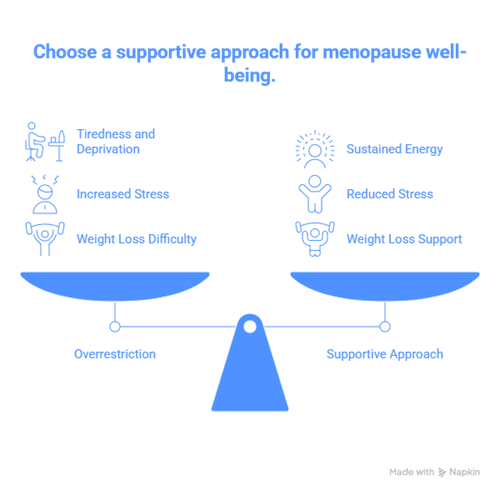
During menopause, advice that centres on eating less can sometimes do more harm than help. Over-restriction may leave you feeling tired, deprived, and more stressed, both physically and emotionally. When the body senses ongoing stress, it holds onto energy more tightly, which in turn makes losing weight feel even more difficult and hopeless. If strict plans have stopped working, it is not because of a lack of discipline. It may be a sign that your body needs a more supportive approach.
Excessive cardio without strength training
Many traditional plans focus heavily on cardio but overlook strength training. While cardio can support heart health, too much of this workout - without resistance work - may not help protect muscle mass, which becomes especially important during menopause. Muscle helps support metabolism, strength, balance, and everyday energy. Without building or maintaining it, weight-loss efforts can feel frustrating and unsustainable.
Ignoring protein, sleep, and recovery
Another common problem is advice that focuses only on calories while ignoring the bigger picture. Protein helps preserve muscle and supports fullness, while sleep and recovery play a major role in the regulation of hunger, energy, and hormones. When you are exhausted or undernourished, it becomes much harder to make choices that feel steady and manageable. Your body deserves care, not punishment.
Short-term focus vs. long-term health
Quick fixes often promise fast results, but menopause is a longer-term transition that calls for patience and consistency. A plan built only for rapid weight loss may overlook bone health, muscle strength, stress, and overall well-being. The most effective approach is often the one that helps you feel stronger, better rested, and more supported over time.

What does effective weight management during menopause look like?
Clear definition
Effective weight management during menopause is not about chasing perfection or forcing yourself to fit an outdated standard. It is about supporting your body through a significant hormonal transition in a way that feels realistic, sustainable, and respectful of your health. For many women, this means focusing on maintaining or gradually improving body composition, energy, strength, and overall well-being rather than expecting rapid change. If progress feels slower than it once did, know that this does not mean you are doing something wrong.
Health-first vs. scale-only outcomes
During menopause, the number on the scale tells only one small part of the story. A health-first approach looks at broader signs of progress, such as improved energy, better sleep, stronger muscles, steadier appetite, and greater confidence in daily routines. Weight may still be one measure, but it should not be the only one. In many cases, positive changes in habits and health markers are more meaningful and sustainable than short-term shifts on the scale. This perspective will help reduce frustration and create room for more compassionate self-care.
Importance of nutrition quality and structure
Nutrition quality and meal structure become especially important during menopause. Rather than relying on extremes, many women tend to do better with balanced meals built around protein, fibre, and whole foods. For example, CSIRO Total Wellbeing Diet’s menopause diet plan emphasizes a structured approach with daily breakfast, lunch, dinner, and snack recipes, in addition to a high-protein, low-GI, high-fibre framework designed to support satiety and steady energy. This plan also places added emphasis on nutrients such as protein and calcium, while avoiding rigid calorie counting. This kind of nourishment-focused structure can feel far more supportive than restrictive dieting.

Menopause weight management vs. Traditional weight loss
Menopause weight management |
Traditional weight loss |
|
Calorie focus: Emphasises adequate nourishment and a moderate calorie approach that supports energy, hormones, and long-term health. |
Calorie focus: Often centres on cutting calories aggressively, with less attention to hormonal or age-related needs. |
|
Protein intake: Prioritises higher protein intake to help preserve muscle mass, improve fullness, and support metabolism. |
Protein intake: Protein is often overlooked, with more focus placed on total calorie reduction alone. |
|
Exercise strategy: Encourages a balanced routine with strength training, walking, mobility, and recovery. |
Exercise strategy: Frequently relies heavily on cardio, but at times without enough resistance training to protect muscle. |
|
Metabolic impact: Aims to support metabolism by protecting muscle, reducing over-restriction, and encouraging steady, sustainable habits. |
Metabolic impact: Can place stress on the body through repeated dieting, which may contribute to fatigue and reduced adherence. |
|
Sustainability: Built around realistic, supportive routines that can be maintained during midlife and beyond. |
Sustainability: Often focused on short-term results, making it harder to sustain over time. |
Core nutrition strategies for women’s weight management in menopause
A thoughtful nutrition strategy during menopause should feel supportive, not punishing. This is a stage of life where the body benefits from more targeted nourishment, greater structure, and meals that work with changing hormonal and metabolic needs. Drawing on the CSIRO Total Wellbeing Diet menopause approach, the focus is not simply on eating less. This approach also provides guidance for eating in a way that supports healthy weight management, steadier energy, appetite control, and long-term wellbeing. Its framework is especially relevant here: a higher-protein, low-GI, high-fibre plan built around balanced meals and practical recipes.
Protein intake and muscle preservation
Why protein needs increase
Protein becomes especially important during menopause because muscle mass naturally becomes harder to maintain. This matters far more than for the sake of appearance. Muscle supports metabolic health, strength, mobility, and daily energy expenditure, so preserving it is a key part of effective weight management. The CSIRO Total Wellbeing Diet menopause diet plan reflects this need by placing lean, protein-rich foods at the centre of the meal pattern. In practice, this plan is designed to help women feel fuller for longer periods of time, reduce cravings, and create a more stable foundation for healthy eating across the day.
Practical food examples
A practical way to apply this plan is to include a quality protein source at each meal and snack. Helpful options include Greek yogurt, eggs, cottage cheese, chicken, turkey, fish, tofu, tempeh, lentils, beans, and edamame. CSIRO Total Wellness Diet’s Women’s Wellbeing Meal Plan supports this with daily breakfast, lunch, dinner, and snack recipes, which makes putting these principles into consistent action easier. It should be noted that this structure can be especially helpful when energy is low or decision fatigue is high.

Low GI and blood sugar stability
Energy, cravings, and appetite control
Blood sugar stability may have a significant influence on how women feel during menopause. Meals built around low-GI carbohydrates may help support steadier energy, fewer sugar crashes, and better appetite regulation. Maintaining healthy blood sugar is one of the clear strengths of the CSIRO Total Wellbeing Diet menopause diet plan, which uses low-GI whole grains and slow-release foods to help stabilise mood and energy. When blood sugar is more stable, cravings often feel less intense, and women may find it easier to eat in a calm, consistent way rather than swinging between restriction and overeating.
Fibre, healthy fats, and satiety
Supporting digestion and heart health
Fibre and healthy fats play an important supporting role in menopause nutrition. Fibre helps with fullness, digestive comfort, and overall meal satisfaction, while healthy fats support heart health—an increasingly important consideration in midlife. The CSIRO Total Wellbeing Diet menopause diet plan leans into this by including high-fibre, digestion-friendly recipes and heart-smart fats and oils. Additional highlights include nutrient-dense whole foods and calcium-rich low-fat dairy to support bone and muscle health. Together, these elements help create meals that are not only satisfying, but protective of overall health as well.
Meal timing and structure
Balanced meals vs. skipping meals
Meal structure makes a meaningful difference during menopause. Skipping meals often leads to dips in energy, stronger cravings later in the day, and a greater sense of being out of sync with hunger signals. A more supportive approach is regular, balanced meals that combine protein, fibre-rich carbohydrates, and healthy fats. This is where the CSIRO Total Wellbeing Diet model is especially useful: Its clear, daily structure of breakfast, lunch, dinner, and snacks can reduce guesswork and make nourishing choices easier to maintain. Rather than encouraging extremes, this model offers a calm, consistent rhythm of eating that better supports weight management, energy, and long-term health.
The role of lifestyle in menopause weight management
Strength training and daily movement
Lifestyle habits are a real source of momentum during menopause. Strength training is one of the most empowering activities because it helps protect muscle mass, which supports metabolism, strength, balance, and everyday confidence. Daily movement matters, too. Walking, stretching, and staying active throughout the day can all contribute to energy use and overall wellbeing. The encouraging part is that these combined activities do not need to be intense to be effective. Adapting small, regular habits that involve moving all add up in meaningful ways to help you feel stronger and more capable over time.
Sleep and stress management
Sleep and stress management make a noticeable difference in how you feel, both physically and emotionally. Better sleep supports energy, appetite regulation, and resilience, while stress management will help you feel more grounded and in control. Creating a few calming routines during menopause can have a powerful effect. A consistent bedtime, time away from screens, gentle stretching, or even a short walk will all support better recovery. Healthy sleep habits are not ‘extras’; they are part of a strong foundation for making you feel your best.
Hydration and routine consistency
Hydration and consistency may seem simple, but they are incredibly effective. Drinking enough water supports digestion, energy, and overall wellness, while steady routines around meals, movement, and sleep make healthy habits feel easier to maintain. The beauty of this approach is that it is realistic. Menopause weight management does not have to rely on extremes. The most powerful progress often comes from small supportive habits repeated with consistency, patience, and self-compassion.
Who benefits most from a structured menopause weight-management plan?
Women with stubborn weight gain
If weight suddenly feels harder to manage despite doing all the ‘right’ things, you are not imagining it. Hormonal shifts during menopause influence appetite, body composition, and where weight is stored, which makes old routines feel less effective. A structured plan helps remove this sense of frustration by focusing on realistic nutrition, movement, and lifestyle habits that support your body as it changes.
Perimenopause vs. postmenopause
Both perimenopause and postmenopause will likely bring about weight-related challenges, but the experience is not always the same. Perimenopause often comes with fluctuating hormones, changing energy, and unpredictable symptoms, while postmenopause may feel more steady but still affect metabolism and muscle mass. A thoughtful plan can help meet you where you are, with support that reflects your stage and symptoms rather than a ‘one-size-fits-all’ approach.
Women seeking guidance over guesswork
For many women, the hardest part is knowing what approach genuinely works. A structured menopause weight-management plan offers clarity, reassurance, and personalised support. Whether the plan includes nutrition, lifestyle changes, or medically guided options, having an informed path forward can make the process feel more manageable, empowering, and far less overwhelming.
How to get started with weight management during menopause
Self-assessment and realistic goals
Weight changes during menopause may feel discouraging, so begin with self-awareness rather than self-criticism. Notice patterns in hunger, energy, sleep, movement, and snacking. Instead of chasing rapid weight loss, focus on realistic goals such as eating balanced meals, improving consistency, and supporting your energy and wellbeing. Small, sustainable changes are often the most effective.
Using structured meal plans and tools
A structured plan will make healthy eating feel more manageable during menopause. The CSIRO Total Wellbeing Diet Women’s Wellbeing Meal Plan uses higher protein, lower GI meals with fibre, and omega-3 fats to help support fullness, energy, and overall health. Helpful tools such as meal planning guidance, tracking features, and expert education helps to reduce decision fatigue and makes consistency easier. As a member of CSIRO Total Wellbeing Diet, you’ll receive access to a suite of digital tools to build healthy habits including a food and exercise tracker, weight tracker, app, and My Journey AI-powered milestone tool.
Menopause-specific programs
Menopause-specific programs offer more relevant support than general dieting advice. The CSIRO Menopause Plan is designed to support weight loss during perimenopause and menopause with a high-protein, low-GI, high-fibre approach, complemented by recipes, tutorials, tracking tools, coaching, and community support. This kind of tailored guidance will help you feel supported, informed, and more confident.
FAQs: Women’s weight management and menopause
Q: Can I lose weight during menopause?
A: Yes! Weight loss during menopause is still possible, but keep in mind that it may feel slower than before. The CSIRO Total Wellbeing Diet Menopause Plan is specifically designed to support weight loss during perimenopause and menopause by using a high-protein, low-GI, high-fibre approach. Our Women’s Wellbeing Meal Plan includes daily breakfast, lunch, dinner, and snack recipes designed to help balance hormones, support energy, and keep you feeling fuller for longer periods of time.
Q: How do I lose weight during menopause?
A: Focus on simple, sustainable habits: Choose balanced meals with plenty of protein and fibre, stay active with both walking/cardio and strength training, and support sleep and stress management. Following a higher-protein, low-GI approach such as the CSIRO Total Wellbeing Diet may also help reduce cravings and keep you feeling full after eating. If you need extra support, speak with your doctor or a dietitian.
Q: Why is belly fat common during menopause?
A: Belly fat is common during menopause because hormonal changes (especially falling estrogen) shifts fat storage toward the abdomen. Simultaneously, age-related muscle loss, stress, poor sleep, and lower activity may make weight gain more noticeable. The CSIRO Menopause Plan addresses this with meals built around lean protein, low-GI whole grains, fibre, and healthy fats, all of which help support hormonal balance, steady energy, and avoid the temptation to indulge in unnecessary snacking.
Q: Do I need to eat fewer calories?
A: Not usually. In fact, eating too little can leave you tired, hungry, and more likely to overeat later. The CSIRO Total Wellbeing Diet focuses less on extreme restriction and more on structured, nourishing meals that support weight loss while helping manage cravings and blood sugar. This diet is therefore a more sustainable option rather than one that focuses on very low-calorie dieting.
Q: Why is it harder to lose weight during menopause?
A: During menopause, it can be harder to lose weight since hormonal changes affect appetite, cravings, energy levels, and where the body stores fat. This makes the temptation to overeat easier, not to mention still not feeling full afterwards. A structured, higher-protein, low-GI approach like the CSIRO Total Wellbeing Diet may help by reducing cravings and keep you feeling fuller for longer.
Q: Is weight training necessary?
A: Although weight training is not mandatory, it can be very helpful. Weight training supports muscle and bone health, which becomes especially important during menopause. Combined with the CSIRO Menopause Plan, this activity complements a healthy eating routine and supports long-term wellbeing.
Final thoughts: A sustainable approach to weight management during menopause
Long-term health focus
During menopause, weight management is not about quick fixes. It is about supporting your body with habits that protect your energy, strength, and overall wellbeing. The CSIRO Total Wellbeing Diet encourages a sustainable approach through nourishing, structured eating that supports long-term health.
Consistency and support
Small, consistent steps often matter most. Balanced meals, regular movement, and simple routines feel far more achievable than extreme dieting. The CSIRO Total Wellbeing Diet Women’s Wellbeing Meal Plan offers helpful structure, making it easier to stay on track with supportive guidance and realistic routines.
Menopause resources
You do not have to pursue this journey alone. CSIRO Total Wellbeing Diet offers trusted resources that provide reassurance, education, and practical tools that make healthy change feel more manageable.
Ready for a supportive next step in your weight-loss journey? Explore the CSIRO Total Wellbeing Diet.
Want to know how much weight you could lose? Take our free weight-loss quiz and find out!