Mary unlocked the secret of protein, lost 15 kg and no longer avoids having her photo taken!
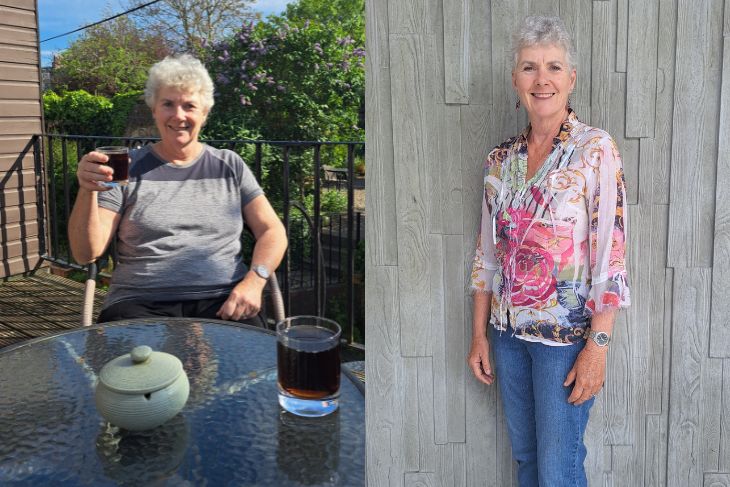
For most of her adult life, Mary McConnell was the picture of fitness. A group fitness instructor and personal trainer, she was an athlete who never gave her weight a second thought. Then retirement arrived, menopause hit, and everything changed.
At 61, the Gold Coast retiree joined the CSIRO Total Wellbeing Diet, lost 15 kg - dropping from a size 16 to a 10/12 - came off blood pressure medication, and found her way back to the strong, confident woman she has always been! Here's how she did it.
*Weight lost over 24 weeks. Individual results may vary.
Life before the weight loss
After decades of structured, active living, the routine that had kept Mary healthy simply disappeared almost overnight.
"I was a very active person before retirement," she recalls. "I lived on acreage, which required a lot of maintenance."
But when she and her husband retired and moved into a unit, they began travelling in their caravan, which meant a lot of sitting. It also meant far less control over food choices and more social eating.
Then came menopause, which combined with a more sedentary lifestyle, saw her weight climb steadily despite her best efforts.
She tried the approaches she'd seen people recommend online: cutting out "garbage" foods, intermittent fasting, keto, even a carnivore-style diet. She gave up breakfast, bread, and fruit. None of it worked the way it had when she was younger. Her clothes kept getting tighter and she had to buy new ones, something she had sworn she would never do.
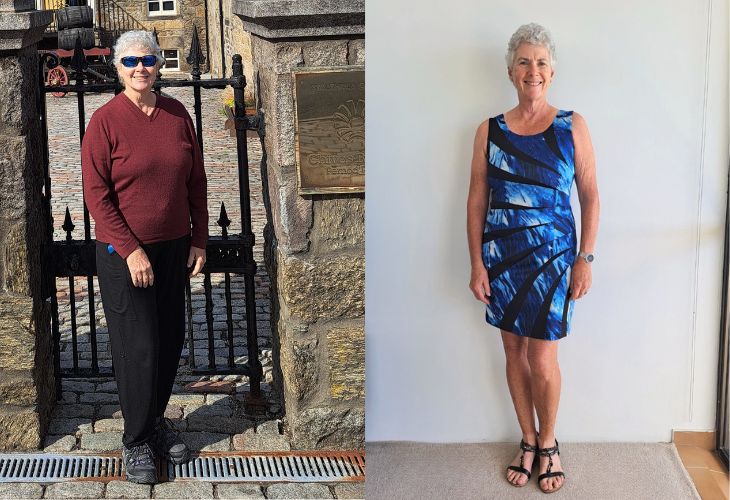
Mary's moment of truth
The turning point came in the week between Christmas and New Year, at her doctor's office. Mary had gone in for a blood pressure prescription renewal and while she was there, her doctor checked her height and weight. The scales read 80 kg.
"I nearly died! That was the moment!!!!" she says.
Having previously seen advertising for the CSIRO Total Wellbeing Diet and the option to do the program through her health fund, Mary went home, filled in the form, discovered she qualified for the 16-week program, and read everything she could find. She officially started on the first of January.
After years of trying approaches that required cutting out entire food groups, what drew Mary to the CSIRO Total Wellbeing Diet was the opposite: a program built around eating real, varied food, with a structured framework simple enough to adapt to her life. The science behind it - particularly around higher-protein eating and its role in supporting metabolism and muscle - resonated immediately with someone who had spent her career in the fitness industry.
How Mary made the program work for her
Mary faced a practical challenge from day one: her husband had made it crystal clear he wasn't interested in eating what he called "rabbit food." Thankfully, the CSIRO Total Wellbeing Diet isn't based around restriction and the program's unit-based system, which assigns simple portion values to each food group, gave Mary the flexibility to create meals that were both delicious and nutritious.
She adapted her own favourite recipes using the combo feature, turning familiar dinners like bolognese and meatballs into higher-protein, nutritionally balanced meals that the whole household could enjoy. There was no separate cooking, no "diet food" on one side of the table. Just good meals, made smarter.
This kind of flexibility and simplicity for busy lifestyles is a defining feature of the program - and for Mary, it was the difference between a diet she could white-knuckle through for a few weeks and a way of eating she could genuinely sustain.
The role of protein
For most people, protein is something they know they should be eating more of, without being entirely sure why. For Mary, with her background in fitness and exercise science, the importance of protein was already on her radar, but the CSIRO Total Wellbeing Diet helped her put it into consistent, daily practice in a way she hadn't managed before.
"Protein has played a huge role in my journey," she says. "It keeps me satisfied, fuels my activity, and helps me stay strong."
The program's higher-protein approach is grounded in CSIRO research showing that adequate protein intake supports appetite control, preserves lean muscle mass during weight loss, and helps maintain a healthy metabolism - all of which become increasingly important as we age.
For women going through menopause in particular, muscle preservation is a critical factor in long-term health, energy, and metabolic function.
Mary is now back in the gym twice a week lifting heavy weights, walking 7 km nearly every day, playing lawn bowls three times a week, and line dancing once a week.
Having the right amount of protein each day isn't just about weight management for her, it's about fuelling the active life she has rebuilt, and continuing to build strength as she ages.
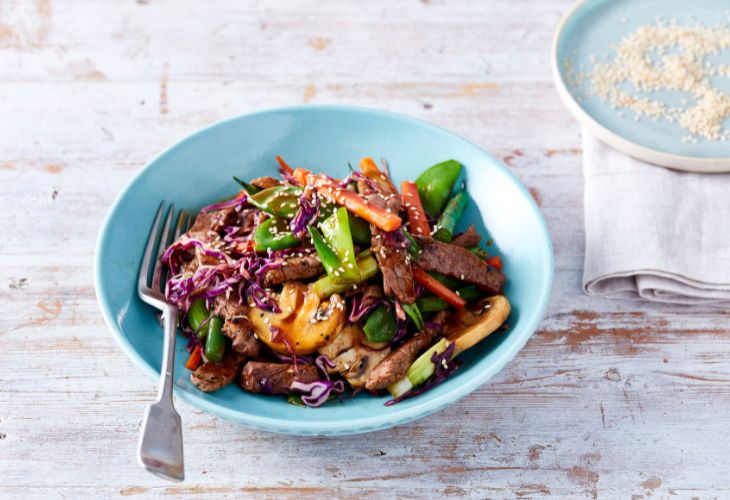
Mary's go-to protein sources:
"Simple, budget-friendly protein-rich options like mince-based meals have become go-to staples, proving that eating well doesn't have to be expensive or restrictive," she says.
-
Greek yoghurt: a morning staple with fruit for an early protein boost
-
Smoked salmon and chicken: regular lunch salad additions
-
Feta cheese: a flavoursome, protein-rich salad topper
-
Lean mince: the backbone of go-to dinners like bolognese and meatballs
-
Lean meats and seafood: the centrepiece of most evening meals
Not sure how much protein is right for you? Age, activity level, and life stage all affect your daily needs, and most Australians are falling well short of the optimal amount. Use the free CSIRO Total Wellbeing Diet protein calculator → to find out exactly how much you should be aiming for each day.
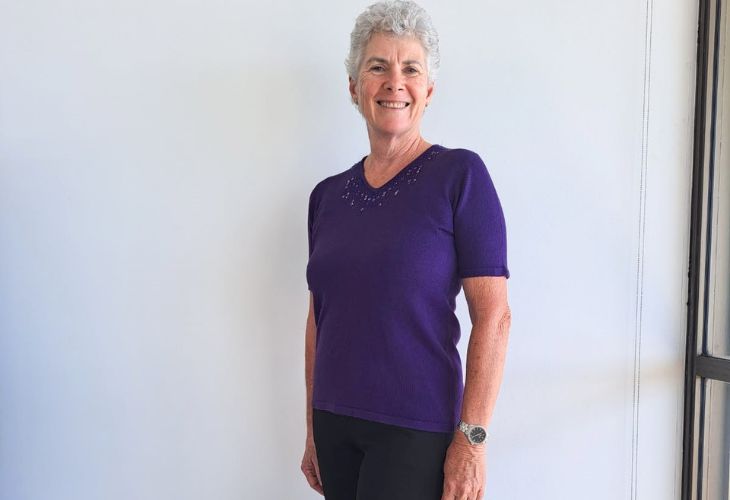
How Mary's life has changed
"I am so much happier within myself," she says. "I look forward to going out socially again, after dreading it because I had nothing to wear, and looked fat in everything I owned. I avoided having my photo taken because I looked so bad, compared to how I spent most of my life. Now, I'm front and centre - I'm actually looking forward to the future!"
The physical changes have been significant too. She can walk without discomfort. She is wearing clothes she hasn't been able to wear for years. And perhaps most meaningfully, she has come off the blood pressure medication that had been such a source of distress just months earlier.
"The best thing is coming off the blood pressure medication!" she says. "And going from a size 16 to a 10/12!"
Her relationship with food has shifted from one of deprivation and frustration to one of genuine enjoyment and control. She can plan her day around meals without feeling restricted. She can travel, eat cheese, drink wine, enjoy social occasions - and know exactly how to recalibrate when she comes home.
"I can now plan my day around my meals, and not be deprived of anything, in moderation," she says.
This is what sustainable weight loss looks like in practice. Not a dramatic short-term transformation that slowly unravels, but a recalibration of habits, mindset and knowledge that continues to pay dividends long after the initial weight is lost.
Mary's top tips for anyone starting out
- Read everything on the website first. Understanding the program before you start means fewer questions, less uncertainty, and more confidence in the early weeks when habits are forming.
- Join the Facebook community. The member community is a source of motivation, recipe ideas, and the kind of peer support that makes a real difference when momentum dips.
- Plan your week in advance. Knowing what you're eating before the week begins removes the decision fatigue that leads to poor choices when you're tired or busy.
- Modify your favourite recipes. You don't have to abandon the meals you love. Use the unit system to adapt them to the program, just as Mary did with her bolognese and meatballs.
- Use your daily indulgences. They are there for a reason. Using them, rather than banking guilt, is part of what makes this a way of eating you can actually maintain.
And for anyone over 50 who is wondering whether it's too late: "It's never too late to try something new," Mary says simply. She started at 61 and she's never looked back.
Are you ready to find your way back to feeling like yourself? Start by finding out how much protein your body actually needs. Try the free CSIRO Total Wellbeing Diet protein calculator here.